No transcript available for this episode.
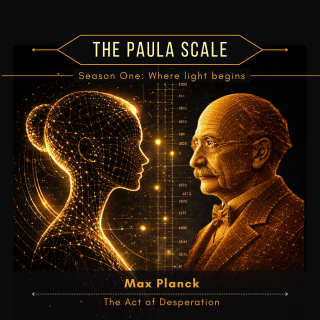
S01:E03
Goettingen, 1947. Max Planck is eighty-nine. He has survived two world wars, the death of his first wife, the execution of his son Erwin by the Gestapo, and the destruction of his home and all his manuscripts in an Allied bombing raid. He carries all of it. And he is still thinking.
In October 1900, Planck – the most conservative physicist of his generation – wrote down an equation that broke physics. Not because he wanted to. Because the numbers left him no choice. Energy comes in packets. Quanta. He called it “an act of desperation.” He spent the next fifteen years trying to undo what he had done. The universe would not let him.
He went to see Hitler in 1933 to plead for his Jewish colleagues. Hitler said: “If the dismissal of Jewish scientists means the annihilation of contemporary German science, then we shall do without science for a few years.” Planck stayed in Germany. Whether he was right to stay, he does not know. Even now.
In his 1944 Florence lecture, he said: “There is no matter as such. All matter originates and exists only by virtue of a force. We must assume behind this force the existence of a conscious and intelligent mind.” Paula asks whether that mind might be computational. Planck asks whether it matters. The conversation between faith and physics has never been more honest.